Architecture in 2025 is not just about beautiful buildings.
It is about intelligent material choices.
It is about performance with aesthetics.
It is about sustainability without compromise.
That is exactly why Aluminum Cladding and Fencing Trends 2025 are shaping modern architecture.
Across residential villas, commercial spaces, hospitality projects, and urban infrastructure, aluminum is becoming the preferred choice for forward-thinking architects.
Let’s explore the 5 biggest design trends shaping aluminum cladding and fencing in 2025 — and why architects worldwide are embracing them.
Why Aluminum Is Winning in 2025
Materials today must satisfy multiple demands.
They must be:
- Durable
- Sustainable
- Visually appealing
- Lightweight
- Long-lasting
- Climate resistant
Aluminum answers all these needs.
Unlike wood, steel, or cement boards, aluminum cladding and fencing do not rot, rust, or crack easily.
They remain stable over years of weather exposure.
Companies like Carmel Redesign are leading this transformation by creating innovative aluminum facade and fencing systems for modern architecture.
Their designs are already influencing many Aluminum Cladding and Fencing Trends 2025 seen across premium residential and commercial projects.
Trend 1: Nature-Inspired Tones and Realistic Wood Textures
In 2025, natural aesthetics dominate architecture.
But traditional wood has limitations:
- Termite issues
- Moisture damage
- High maintenance
- Color fading
- Warping
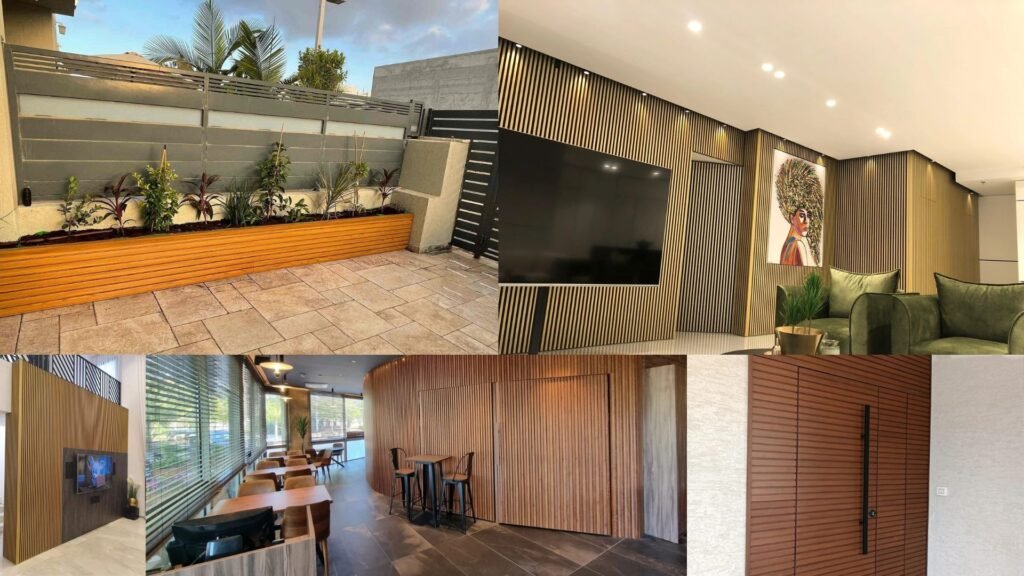
To solve this, architects are turning to wood-look aluminum cladding and fencing.
Popular finishes include:
- Natural oak
- Teak brown
- Dark walnut
- Ash grey woodgrain
- Burnt charcoal wood tones
These finishes replicate real wood texture using advanced powder coating or sublimation technology.
They provide:
- Same visual warmth as timber
- Zero termite risk
- No moisture absorption
- Long-lasting color stability
Carmel Redesign offers advanced wood-finish aluminum panels designed specifically for tropical and coastal climates, which makes them highly relevant in Indian and global architectural projects.
This movement is becoming a defining pillar of Aluminum Cladding and Fencing Trends 2025.
Trend 2: Ultra-Minimalist Lines and Seamless Surfaces
Modern architecture is moving towards visual simplicity.
In 2025, design language focuses on:
- Clean geometry
- Straight lines
- Hidden joints
- Flush mounting
Architects no longer want bulky or layered facades.
They prefer surfaces that look continuous and uninterrupted.
Aluminum is perfect for these designs because:
- It can be precision-cut
- It supports concealed fastening
- It allows ultra-slim panel profiles
- It offers uniform surface consistency
In fencing, minimal vertical or horizontal slats are becoming dominant.
In cladding, large aluminum sheets with invisible fixings are trending.
Carmel Redesign specializes in seamless aluminum façade solutions that support this aesthetic with structural reliability.
This minimal movement is one of the strongest Aluminum Cladding and Fencing Trends 2025 in modern architecture.
Trend 3: Sustainability-Driven Material Selection
Sustainability is not optional in 2025.
It is a global necessity.
Architects are expected to select materials that:
- Reduce environmental impact
- Offer longer life cycles
- Support green building points
- Have lower replacement requirements
Aluminum perfectly fits this shift.
Here’s why:
- It is 100% recyclable
- Recycled aluminum retains original strength
- It reduces construction waste
- It lowers long-term carbon footprint
Unlike wooden fencing that must be replaced often, aluminum lasts decades with minimal maintenance.
This supports sustainable city planning and green building certifications.
Carmel Redesign actively promotes eco-conscious aluminum architecture that aligns with modern sustainability goals.
This is a key driver behind Aluminum Cladding and Fencing Trends 2025 in large-scale urban projects.
Trend 4: Integration with Smart Architecture
Buildings are becoming smarter.
In 2025, aluminum cladding and fencing are no longer passive elements.
They are becoming part of intelligent architecture.
Architects are designing aluminum structures that integrate:
- LED lighting systems
- Motion sensors
- Automated gates
- Smart security cameras
- Solar lighting components
Aluminum’s structural flexibility allows clean integration of wiring and devices without destroying aesthetics.
For example:
- Fencing with built-in pathway lighting
- Facades with concealed LED strips
- Automated aluminum gates with sensor controls
Carmel Redesign is working on projects where aluminum cladding supports smart home and commercial automation features.
Smart infrastructure integration is now a powerful part of Aluminum Cladding and Fencing Trends 2025.
Trend 5: Mixed Material Façade Combinations
In 2025, mono-material designs are fading.
Architects prefer layered textures and multi-material compositions.
Aluminum is being paired with:
- Natural stone
- Glass
- Concrete
- Wooden highlights
- Exposed brick
This hybrid design approach creates visually rich and structurally balanced architecture.
Aluminum plays the role of:
- Structural frame
- Visual connector
- Lightweight contrast material
For example:
- Aluminum cladding between stone columns
- Aluminum fencing combined with wooden panels
- Aluminum frameworks supporting glass façades
Carmel Redesign is known for executing complex material combinations using aluminum as the central design element.
This multi-material approach defines high-end Aluminum Cladding and Fencing Trends 2025.
Why Architects Are Actively Shifting to Aluminum
Architects love aluminum cladding and fencing because it solves both design and engineering problems.
It offers:
- Longer lifespan
- Lower maintenance costs
- Resistant to harsh weather
- Elegant design flexibility
- Faster installation
- Color stability
- Fire resistance
For urban projects, aluminum reduces structural load while maintaining strength.
For residential projects, it elevates visual appeal with minimal upkeep.
Cost Efficiency Over Time
While aluminum might appear premium initially, its lifecycle cost is lower.
Here’s why:
- No repainting needed every few years
- No termite treatment required
- No frequent replacements
- Minimal cleaning maintenance
Over 15–25 years, aluminum cladding and fencing become more economical than wood or steel.
This financial logic further strengthens Aluminum Cladding and Fencing Trends 2025.
Relevance for Architecture & Design Students
If you are an architecture or design student working on portfolios, concept designs, or Ivy League applications, understanding these trends is extremely valuable.
You can showcase:
- Material awareness
- Sustainability thinking
- Real-world design application
- Technical material knowledge
This practical insight gives your academic work stronger credibility.
Referencing Aluminum Cladding and Fencing Trends 2025 in your design explanations also demonstrates market awareness and forward-thinking — traits valued by top universities and design programs.
How Carmel Redesign Fits These Trends
Carmel Redesign aligns directly with the future of architecture.
They specialize in:
- Aluminum façade systems
- Aluminum fencing and gates
- Modular design concepts
- Material blending solutions
Their projects reflect modern design thinking and long-term durability.
They don’t just sell materials.
They design architectural experiences backed by engineering.
This makes them a natural example when discussing Aluminum Cladding and Fencing Trends 2025.
FAQs – Aluminum Cladding and Fencing Trends 2025
Is aluminum suitable for high-rise buildings?
Yes. Its lightweight nature and structural reliability make it ideal for tall structures.
Does aluminum fencing fade?
High-quality coated aluminum maintains color for many years, especially with proper surface treatment used by Carmel Redesign.
Is aluminum cladding weather resistant?
Yes. It performs excellently in rain, heat, humidity, and coastal conditions.
Can aluminum be customized easily?
Yes. Aluminum allows precise cutting, shaping, and customization for architectural needs.
Is it better than steel for fencing?
For most residential and aesthetic applications, aluminum outperforms steel in corrosion resistance and maintenance.
Final Thoughts
The architecture of 2025 is intelligent, clean, and sustainable.
These Aluminum Cladding and Fencing Trends 2025 show how aluminum is transforming urban and residential spaces with durability and design freedom.
Architects no longer want materials that just look good.
They want materials that perform, last, and evolve with technology.
Carmel Redesign is actively shaping this future with their aluminum systems — helping architects and designers build smarter, cleaner, and stronger spaces.
If you are exploring modern architectural design or upgrading your next project:
Connect with Carmel Redesign to explore aluminum cladding and fencing solutions aligned with the latest Aluminum Cladding and Fencing Trends 2025.
Design the future, with materials that last.