
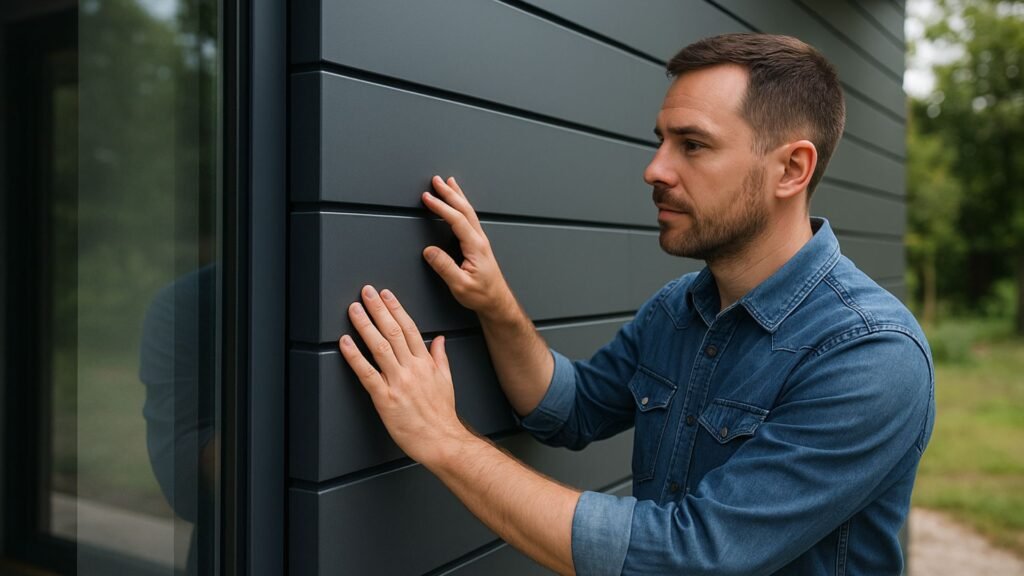
Have you ever wondered why many of the world’s most iconic and long-lasting buildings use metal façades instead of wood or stone?
What makes Aluminum Cladding Durability such a powerful selling point in architecture and construction?
If you’re a student planning to cite building materials in your Ivy League engineering or architecture application essays, this blog will arm you with scientific reasons and real-world context to choose aluminum cladding.
In this post, we explore 5 scientific reasons why Aluminum Cladding Durability often outperforms other materials. We also weave in how Carmel Redesign uses and recommends aluminum cladding solutions for top-tier projects. By the end, you’ll see not just the “what,” but the “why”, with data, and how to incorporate this knowledge in your academic writing or project proposals.
Why Focus on Aluminum Cladding Durability?
Before diving into the reasons, let’s clarify:
- When we say Aluminum Cladding Durability, we mean the ability of aluminum cladding systems to resist degradation (corrosion, fatigue, impact, UV exposure, etc.) over a long service life.
- For students writing on material science, architecture, or engineering themes, having a deep understanding of durability mechanisms gives you a competitive edge in essays, research, and interviews.
- Carmel Redesign, known for its façade design and material consulting services, often highlights Aluminum Cladding Durability in its project portfolios and client recommendations.
We will revisit Carmel Redesign later; first, let’s look at the science.
Overview: Comparison with Other Cladding Materials
| Material | Common Weaknesses | Typical Lifespan* |
|---|---|---|
| Wood | Corrosion (unless protected), heavyweight | 20–30 years (with upkeep) |
| Fiber cement | Cracking, moisture ingress over time | 30–50 years |
| Vinyl | UV degradation, discoloration, brittleness | 20–30 years |
| Steel / Corten | Cracking, spalling, and mortar degradation | 40–60 years (with protection) |
| Stone / Brick | Cracking, spalling, and mortar degradation | 50–100+ years (but heavy, costly) |
| Aluminum Cladding / ACP | Susceptible to dents, possible coating degradation | 50–60+ years (if well designed) |
Let’s quickly see what aluminum competes with: wood, fiber cement, vinyl, steel, stone, brick, and composite panels (e.g., ACPs with plastics).* Lifespans depend heavily on installation, environment, coating, and maintenance.
Aluminum cladding systems, when properly designed and installed, can routinely last over 60 years.
Now, let’s dive into the scientific reasons why.
1. Natural Oxide Layer and Corrosion Resistance
What the Science Says
One of the key defenders of aluminum against corrosion is its ability to form a thin, adherent aluminum oxide (Al₂O₃) layer when exposed to air or moisture. That oxide layer is extremely stable, passive, and protective.
Unlike metals like iron that rust and flake, aluminum’s oxide layer tends to “self-heal” , small scratches or nicks reoxidize quickly and restore protection.
This passive film means that in corrosive environments (coastal air, humidity, acid rain), aluminum will resist degradation far longer than many alternatives.
Why It Beats Others
- Steel, even when painted or galvanized, eventually sees scratches, coatings fail, and corrosion proceeds from the breach.
- Wood rots, delaminates, and collects moisture; it lacks any “self-repairing” barrier.
- Fiber cement or concrete may resist corrosion in their own ways, but they are prone to cracking, delamination, or spalling over cycles of freeze/thaw or thermal expansion.
Because aluminum’s oxide barrier is inherent and self-regenerating, Aluminum Cladding Durability gets a strong first point.
2. High Strength-to-Weight Ratio & Structural Efficiency
What the Science Says
Aluminum has a relatively low density (~2.71 g/cm³), about one-third that of steel, yet with proper alloying, it can maintain substantial strength.
In façade systems, a lighter cladding reduces dead load on the structure, lessening stress on columns and foundations.
Moreover, modern aluminum alloys and composite panels can be engineered for stiffness, impact resistance, and fatigue tolerance. Aluminum façade panel systems are designed to absorb wind loads, thermal expansion, and small impacts without cracking.
Why It Beats Others
- Stone, brick, and concrete are heavy. They require stronger supporting structures, increasing cost and complexity.
- Steel is strong but heavy and more prone to corrosion stress in unprotected form.
- Wood and fiber cement have modest strength relative to weight; they are more susceptible to bending or warping under load or moisture.
Thus, aluminum’s favorable strength-to-weight combination contributes significantly to Aluminum Cladding Durability, especially over decades where fatigue and cumulative loads matter.
3. Thermal and UV Stability, Minimal Fatigue
What the Science Says
A durable cladding must survive cycles of temperature change (day/night, seasonal). Aluminum has good thermal conductivity, which helps distribute heat evenly, and its expansion coefficient is known and manageable in design.
While repeated thermal cycling induces stress, aluminum alloys under proper support systems can withstand many cycles without crack initiation. Furthermore, the oxide layer and selected coatings protect the surface from UV degradation.
UV-resistant coatings (e.g., fluoropolymer paints, anodizing) further shield against fading, chalking, and loss of finish.
In contrast, plastics and composites may degrade under UV, discolor, become brittle, or delaminate over time.
Why It Beats Others
- Vinyl and plastic cladding gradually degrade under UV, losing structural integrity.
- Painted surfaces on steel or wood will eventually chalk, peel, or crack under UV cycling.
- Wood’s moisture expansion and shrinkage combine with UV effects to accelerate aging.
Hence, for the long haul, Aluminum Cladding Durability holds strong under heat and sunlight cycles.
4. Resilience to Fire, Pests, and Biological Attack
What the Science Says
Aluminum is non-combustible and does not fuel a fire; it may warp or melt under extreme temperatures but does not propagate flame.
In many jurisdictions, aluminum cladding systems must comply with fire codes (e.g. ASTM, NFPA, local standards). When designed properly, they contribute minimal combustible load to a building façade.
Also, aluminum is immune to termites, fungal decay, and insect attack. Wood and similar organic materials face chronic risk from these agents, especially in humid or tropical climates.
This means no rot, no insect galleries, and no mold growth eating away the material over decades.
Why It Beats Others
- Wood must be treated; still vulnerable to decay or infestation.
- Fiber cement resists biological attack but is brittle and less forgiving under impact or movement.
- Some composites may have organic cores vulnerable to moisture or pests unless properly sealed.
Thus, Aluminum Cladding Durability includes a built-in defense against fire and biological threats no periodic chemical treatment needed.
5. Recyclability, Sustainability, and Longevity Economics
What the Science Says
Aluminum is one of the most recyclable materials. Recycled aluminum retains nearly all its original physical properties.
Over its life cycle, aluminum cladding requires minimal maintenance, saving costs on repainting, replacement, or repair. Its lightweight nature reduces transportation energy and emissions.
In life-cycle cost analysis, the upfront cost of aluminum may be higher, but the total cost per year of service (accounting for durability and low maintenance) often becomes favorable.
When a cladding element finally does reach the end of life, aluminum can be collected and recycled rather than landfilled, helping sustainability goals.
Why It Beats Others
- Materials like vinyl or composites may degrade into waste or require the disposal of toxic materials.
- Wood, if replaced, may contribute to deforestation or waste.
- Steel is recyclable, too, but the protective coatings may complicate recycling.
- Stone or brick, once broken or removed, is more challenging to repurpose.
Thus, Aluminum Cladding Durability is not just technical strength but long-term sustainability and cost efficiency over decades.
How These 5 Reasons Work Together in Real Projects
When Carmel Redesign plans a façade, these scientific pillars guide material selection:
- The oxide barrier gives the base corrosion protection.
- Structural design leverages strength-to-weight margins so the building’s skeleton isn’t overburdened.
- Coatings and expansion joints account for UV, thermal cycling, and fatigue.
- Fire codes and biological immunity are baked into safety analyses.
- The life cycle cost and recyclability match forward-looking sustainability goals.
By integrating architectural aesthetics with these durable underpinnings, Carmel Redesign differentiates itself as a firm that doesn’t just propose “pretty façades” but lasting, scientific solutions.
Practical Considerations & Caveats
While Aluminum Cladding Durability offers tremendous advantages, real-world success depends on design, execution, and environmental matching. Let’s note some caveats:
- Proper joint sealing and waterproofing are critical. Aluminum itself isn’t waterproof; gaps or poor sealing can compromise the envelope.
- Coating quality and maintenance matter. A poor paint job or low-grade anodizing will degrade faster, reducing durability.
- Denting and impact: aluminum is softer than steel or stone, so heavy impact or sharp objects can dent the panels.
- Thermal expansion design: aluminum expands more than other cladding materials, so allowances must be made in the framing and attachment systems.
- Panel edge staining: In polluted or humid climates, edge staining on anodized or painted façades can gradually discolor panels.
These challenges are manageable, and this is exactly why a façade design firm like Carmel Redesign focuses not just on theoretical durability but practical detailing.
How to Use Aluminum Cladding Durability in Student Projects or Ivy League Essays
If you’re writing a college-level architecture, civil engineering, or materials science essay or proposal, here’s how to leverage this blog’s material:
- Frame the question, e.g., “Why choose cladding materials for high-rising façades in diverse climates?”
- Brief literature review cites scientific sources on aluminum’s passive oxide, alloys, cycling fatigue, and recyclability.
- Use the 5 scientific reasons as your argument structure. Each becomes a section.
- Compare alternatives (wood, steel, composites) using side-by-side tradeoffs.
- Add a case example, mention a hypothetical or real Carmel Redesign façade, and how durability was engineered.
- Reflect on life cycle cost and sustainability tied to your interest in environmental design or LEED certification.
- Conclude with recommendations, for instance, in a humid coastal environment, choose aluminum alloy + high-quality coatings + periodic inspections.
Because your reader (professors, admissions committees) values depth and clarity, providing both scientific justification and real-world realism will set you apart.
FAQs
Q1: What is the expected lifespan of aluminum cladding under ideal conditions?
In well-designed systems, aluminum cladding can last 50 to 60+ years, sometimes even longer with maintenance.
Q2: Can aluminum cladding rust?
Pure aluminum does not rust (rust is iron oxide). Aluminum may corrode under extreme conditions, but its natural oxide layer and coatings prevent typical rusting.
Q3: How does aluminum compare to steel or stone in terms of durability?
Aluminum offers superior corrosion resistance and a favorable strength-to-weight ratio. Steel may be stronger but is heavier and more prone to corrosion unless protected. Stone is durable but very heavy and vulnerable to cracking or spalling.
Q4: Is aluminum cladding eco-friendly?
Yes. Aluminum is highly recyclable without losing properties, and the lifecycle energy and carbon cost is often lower due to less maintenance and longer life.
Q5: Does aluminum cladding work in extreme climates (coastal, arid, tropical)?
Yes, when properly designed. The oxide barrier helps in salty air; coatings and joint detailing manage UV, moisture, and thermal expansion. But panel edge staining and maintenance may be more significant in polluted or humid zones.
Aluminum Cladding Durability isn’t just a marketing buzzword. It stands on concrete scientific foundations: corrosion protection via natural oxide layers, excellent strength-to-weight ratio, resistance to thermal and UV stress, immunity to pests and fire, and full recyclability.
When harnessed through smart design and high standards, aluminum cladding systems clearly outshine many traditional alternatives.
For students eyeing Ivy League essays, grant proposals, or architectural competitions, weaving in these scientific pillars can elevate your technical credibility while showcasing your capability to bridge theory and practice.
If you’d like to see sample façade projects that prove this durability in action, or want help integrating Aluminum Cladding Durability into your next school or design project, check out Carmel Redesign’s portfolio or reach out to their team.
Their design philosophy emphasizes durable performance as much as aesthetics.
Ready to turn your façade ideas into a scientific reality?
Contact Carmel Redesign for design consultation or material insight, and let your next project be backed by lasting science.